
The Long War: Why Couples Fight on, and What is Left When the Fighting Stops
- Reflections from thirty-one years at the Bar
- I have lost count of the number of files that have sat on my table for a decade or more, growing thicker with every hearing, each one a marriage that ended years ago in every sense except the legal one. The couple no longer lives together, no longer speaks except through counsel, and often no longer even remembers what the first quarrel was about. And yet they return, term after term, to the same courtroom, arguing over the same unresolved fragments of a life they no longer share. It is one of the enduring puzzles of matrimonial practice: why do people who have already lost the marriage keep fighting, sometimes for longer than the marriage itself lasted?
- Part of the answer lies outside the law altogether, in the ordinary architecture of hurt pride. A courtroom offers something a marriage in its final years rarely does — a stage on which one’s grievances are heard, recorded, and, if the case goes well, vindicated. For a party who feels wronged, a favourable order can feel less like a legal outcome and more like a verdict on the marriage itself: proof, finally, of who was right. I have watched clients pursue an extra round of litigation not because the incremental sum of money justified the legal fees required to win it, but because losing that round felt, to them, indistinguishable from losing the argument they had been having for years. Litigation, in such cases, is not a means to an end. It has become the relationship, continuing under another name.
- There are more practical reasons too. Delay is rarely accidental. A party who is required to pay maintenance has an obvious incentive to prolong proceedings, since every month of delay is a month’s liability deferred, and interim orders are notoriously difficult to enforce with any speed. A party seeking maintenance, on the other hand, may have every reason to resist a quick resolution if the alternative — a modest lump sum, negotiated under pressure — seems less secure than a running monthly order that can be revised upward as circumstances change. Custody disputes carry their own version of this arithmetic: possession, even interim possession, of a child is a fact on the ground that is hard to dislodge, and a parent who secures it early has little incentive to hurry toward a final hearing that might alter it. The law does not reward patience by design, but in practice, it very often rewards it by accident.
- What, then, do the parties actually get out of these long wars? Rarely what they imagine at the outset. I have seen men who were once comfortably placed reduced, after years of litigation across three or four courts, to a fraction of their former means — not chiefly by the maintenance ultimately awarded, which is often modest, but by the cumulative weight of legal fees, lost professional time, and the sheer exhaustion of contesting appearance after appearance for a decade. I have seen women who might have secured a fair and enforceable settlement in the second year of a case still fighting for arrears in the twelfth, the underlying sum eaten away by the cost of chasing it. Very few walk away from prolonged litigation feeling that the fight was worth its price, even those who technically won. The house, so to speak, tends to take a share no one budgeted for.
- What is perhaps least understood by clients when they first walk into a lawyer’s chamber, angry and certain, is that a divorce decree does not end a matrimonial dispute; it merely changes its name. The marriage may be dissolved in a single hearing, sometimes even by consent, and yet maintenance and child custody can remain live, contested questions for years afterward, revisited each time income changes, a child grows older, a former spouse remarries, or one party simply stops paying. I have appeared in matters where the divorce itself was granted amicably within months, while the question of what the father owes, or when he may see his children, has consumed a decade of subsequent litigation — applications for enhancement, applications for reduction, contempt petitions for non-payment, modification of custody and visitation, each a fresh proceeding grafted onto an old wound. The parties are legally strangers to one another long before they are litigants at peace.
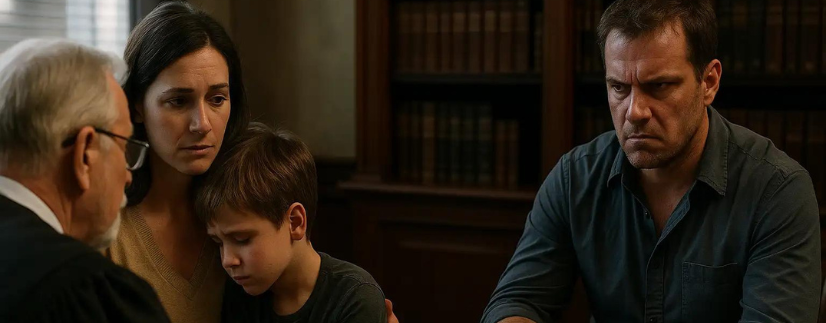
- The children, meanwhile, grow up inside the litigation rather than beside it. I have met young adults, now well into their careers, who can recite the number of their parents’ case as easily as their own date of birth, because it has been a fixture of every school holiday and every family conversation for as long as they can remember. They are consulted, indirectly, in custody evaluations; they are the unstated reason offered for every adjournment sought and every allegation made; and by the time the litigation finally exhausts itself, they are often adults who need no one’s permission to decide whom they will see and how often. The court, in such cases, does not so much resolve the dispute as outlast its own relevance.
- None of this is an argument that people should never contest a matrimonial case, or that every settlement is wise merely because it is quick. Some disputes deserve to be fought — where there is genuine injustice, where a child’s welfare is truly at stake, where the terms on offer are unfair rather than merely disagreeable. But after three decades of watching families dismantle themselves twice over, once in the marriage and once again in its litigation, I have come to believe that the most valuable thing a lawyer can give a client at the first consultation is not optimism about the case, but honesty about its cost — measured not only in fees, but in years, and in what will be left of the client, and of the children watching from the sidelines, when the last order is finally passed. The law will eventually give an answer. Whether it will still matter by the time it arrives is a different question altogether, and one worth asking before the first petition is filed.
This article has been researched and written by Advocate Aarun Chanda, who practices divorce law in Mumbai and Pune. It is intended solely for academic purposes and should not be construed as legal advice. Readers are encouraged to consult a qualified lawyer or advocate specializing in divorce cases for professional legal guidance.
Seeking expert legal guidance?- Contact The Divorce Law Firm today.